Why “Normal Rewards” Don’t Always Work for ADHD Brains
If you have ADHD, you’ve probably been told at some point:
“Just reward yourself.”
“Think about how good it’ll feel when you’re done.”
“Motivate yourself — everyone else can.”
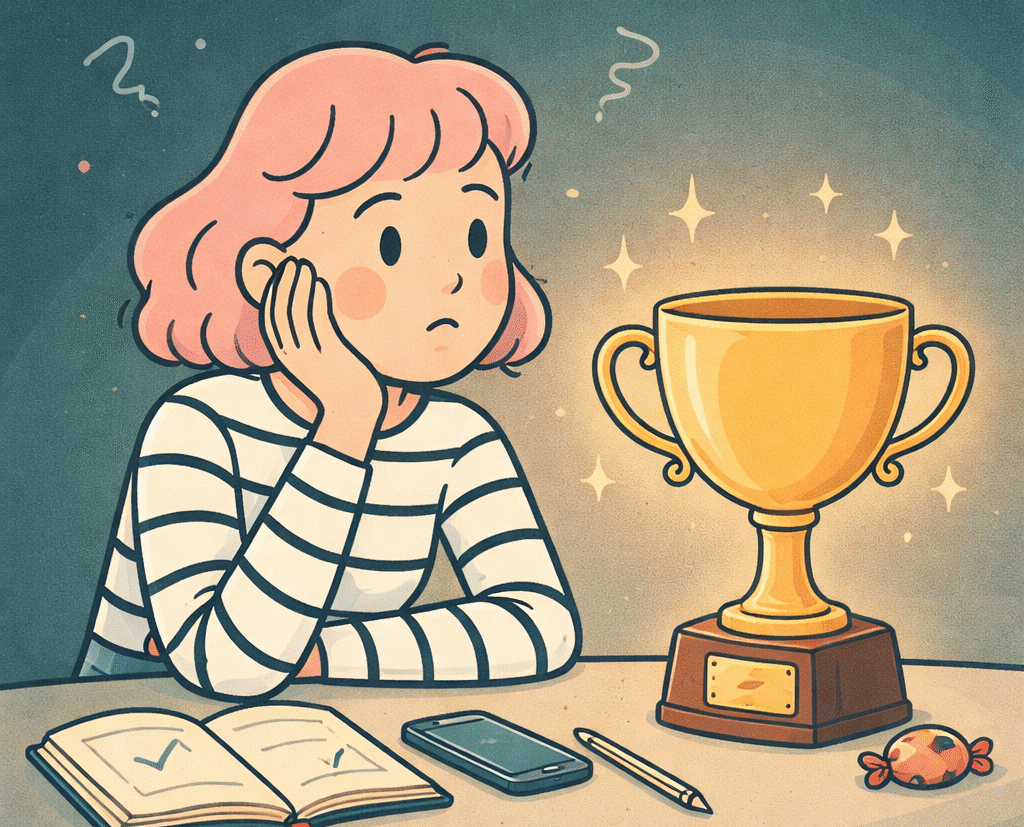
And yet, those rewards rarely work the way people promise they should.
You might struggle to start tasks even when there’s a clear payoff.
Or you might finally finish something important, only to feel flat, empty, or ready to move on almost immediately.
This isn’t ingratitude.
It’s not a lack of appreciation.
And it’s not that you’re chasing the wrong rewards.
For many people with ADHD, this experience is rooted in what’s often described as Reward Deficiency Syndrome — a difference in how the ADHD brain processes motivation, reward, and satisfaction.
What Is Reward Deficiency Syndrome in ADHD?
Reward Deficiency Syndrome refers to a nervous system that doesn’t reliably receive enough internal reward signals from things that typically motivate other people.
In everyday life, this can show up as:
• Difficulty working toward long-term or delayed rewards
• Feeling unmotivated even when outcomes matter
• Not experiencing satisfaction after completing tasks
• Moving quickly from one goal to the next without feeling fulfilled
• Needing high stimulation to feel engaged or regulated
This is not a character flaw.
It reflects how the ADHD brain’s reward system functions.
Dopamine, Motivation, and ADHD
Why Rewards Don’t Always “Land”
Dopamine plays a central role in motivation, anticipation, and how rewards are experienced. It helps the brain:
• Become interested enough to work toward something
• Register a sense of satisfaction when the goal is reached
In ADHD, dopamine signaling can be inconsistent. This creates a double bind.
Motivation often feels weak.
Even when you understand why something matters, the internal drive to start or persist may not show up.
Satisfaction can feel muted or short-lived.
Completing tasks or reaching goals may not produce the “that was worth it” feeling others describe.
As a result, the brain may keep searching for stimulation or novelty, hoping something will finally feel rewarding.
Why Future Rewards Don’t Motivate ADHD Brains
Many productivity systems rely on delayed rewards. For ADHD brains, those future rewards often feel emotionally distant or hard to access.
When the brain can’t feel a reward ahead of time, it can’t use it as motivation. This is why people with ADHD often experience:
• Difficulty with long-term goals
• Reduced motivation for delayed rewards
• Preference for immediate stimulation over future payoff
• Frustration with advice like “just think about the outcome”
This isn’t a failure of foresight.
It’s a difference in how motivation is generated.
Stimulation Seeking in ADHD
Not Impulsivity — Regulation
When internal reward signals are low, the nervous system looks for stimulation externally.
This isn’t recklessness.
It’s regulation.
Many adults with ADHD are drawn toward activities that offer fast, predictable relief or engagement, such as:
• Eating for stimulation or comfort
• Scrolling, gaming, or constant input
• Impulsive spending
• Adrenaline or risk-based activities
• Caffeine, nicotine, or other substances
These behaviors are not about poor self-control.
They’re about a nervous system trying to feel regulated.
A Compassionate Reframe for Late-Diagnosed ADHD
Many late-diagnosed adults internalized beliefs like:
“I don’t get excited about the right things.”
“I’m never satisfied.”
“Nothing is ever enough.”
If this sounds familiar, here’s what matters:
You weren’t ungrateful.
You weren’t greedy.
You weren’t broken.
Your reward system worked differently.
You were trying to motivate an ADHD brain using strategies designed for neurotypical reward systems — without knowing that’s what was happening.
Why Understanding ADHD Motivation Matters
Learning about Reward Deficiency Syndrome isn’t about lowering expectations or labeling yourself.
It’s about removing shame.
When you understand that motivation and satisfaction are biological experiences, not moral ones, something shifts:
• Self-blame softens
• Forced strategies lose their grip
• Curiosity replaces criticism
And curiosity creates room for change.
A Reflection for the Week
Consider:
• A time you felt genuinely engaged
• A moment when effort felt natural
• Something that gave you meaning, not just reward
Those moments tell you more about your ADHD brain than any productivity system ever could.
Your brain isn’t broken.
It just needs a different way to access motivation, engagement, and fulfillment.
Understanding how your reward system works is a powerful place to begin.