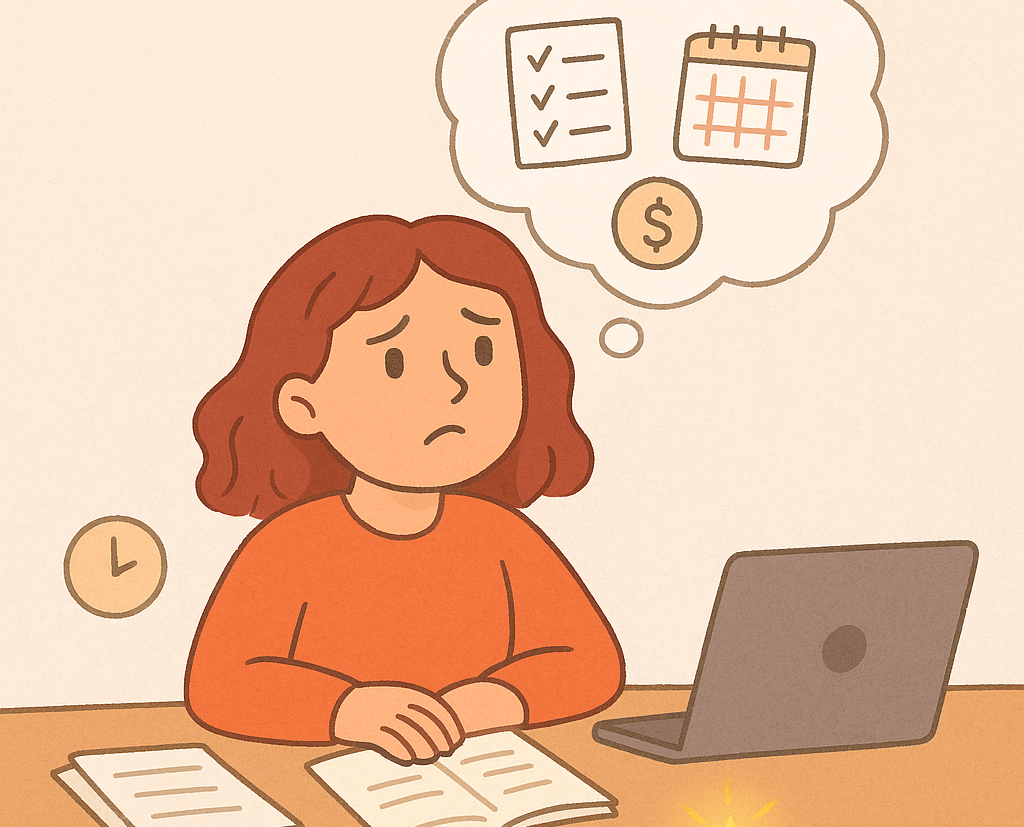
You know what needs to be done. Maybe it’s paying a bill, starting a project, or simply clearing off your desk. And yet… somehow, it doesn’t happen. You’re not lazy or careless. You’re not failing at life. Your brain is just wired differently and that wiring matters a lot when it comes to turning intention into action.
For people with ADHD, knowing what’s important isn’t always enough. There’s a gap between knowing and doing, and it’s not your fault. Understanding why this happens is the first step toward bridging that gap and moving forward with ease, confidence, and self-compassion.
The Fuel Crisis: Why Interest Beats Importance
Imagine your brain as a car engine. For most people, importance is the fuel: “This task is crucial, so let’s do it.” But for ADHD brains, importance alone rarely works. Instead, your brain runs on interest.
When something genuinely sparks your curiosity or engages you, your attention, planning, and problem-solving skills naturally turn on. You can hyper-focus, think creatively, and get things done effortlessly. But if a task feels boring or meaningless, no amount of pressure or “should” can start the engine. You’re left stalled, not because you don’t care, but because your brain simply lacks the fuel it needs.
The good news? When you notice what genuinely catches your attention and lean into it, your brain comes alive. That energy can then spill over into other areas, helping you tackle less exciting tasks bit by bit.
The Brain’s Management Challenge
Even when interest fuels your attention, turning intention into action can feel impossible. That’s because ADHD affects how your brain organizes, plans, and self-regulates. Think of it as the difference between having a map and being able to follow it smoothly.
Impulsivity: Action Without Pause
Sometimes, your mind leaps before your brain can catch up. You act on the first idea that pops up (a rush of emotion or desire) instead of pausing to reflect on your best choice. That split between impulse and intention makes it easy to start in the wrong direction or abandon plans altogether.
Learning to pause, even briefly, gives you the chance to make a conscious choice instead of reacting automatically. It doesn’t have to be long, just enough to check in with yourself: “Is this action moving me toward what I truly want?”
Effort Feels Like a Wall
Another challenge is how your brain experiences effort. Sometimes, a task feels impossibly heavy before you even start. “It’s too hard” or “I’ll never finish” can zap your energy instantly. This isn’t laziness. It’s your brain perceiving the task as overwhelming. Breaking big tasks into tiny, achievable steps is the equivalent of putting small sparks under a cold engine: suddenly, it’s moving.
Traps That Freeze Action: Time and Perfection
Time Disconnection
ADHD brains often live in the now. Future rewards, even if huge, feel distant and unimportant. Saving money, preparing for a presentation, or starting a long-term project? It can feel like those things belong to someone else’s life. This is why small, immediate wins (even tiny steps) are crucial. They connect today’s actions with a sense of progress and accomplishment.
The Perfectionism Trap
Wanting things to be perfect is common and it can be paralyzing. You might think, “I can’t start until it’s exactly right.” But in reality, waiting for perfection often means waiting forever. Progress doesn’t require perfection. Doing something imperfectly is always better than doing nothing, and it’s how momentum builds.
Bridging the Gap: Aligning Energy, Thoughts, and Purpose
Here’s the empowering truth: while ADHD creates obstacles, you can build a bridge from intention to action by harmonizing three simple things:
- Fuel your brain with interest. Engage with what excites you or find ways to make tasks more engaging. Energy sparks attention.
- Support yourself with purposeful thoughts. Positive, intentional thinking helps your brain function more smoothly and prevents old patterns from taking over.
- Connect action to your heartfelt purpose. When what you do aligns with what you deeply care about, motivation naturally flows, making it easier to act consistently.
Even small actions create momentum. When you notice what works and repeat it, your brain gradually rewires, making follow-through easier and more natural.
Small Steps, Big Impact
Bridging the gap between knowing and doing isn’t about more willpower. It’s about understanding how your brain works and working with it instead of against it. Start by:
- Breaking tasks into tiny, achievable steps.
- Checking in with yourself before acting: “Does this move me toward my goal?”
- Allowing imperfection: Done is better than perfect.
- Leaning into your natural interests to fuel your focus.
Closing Reflection
This week, notice where your brain runs on interest and where it stalls. Observe the times you feel frozen by effort, perfection, or time. Awareness itself is a powerful first bridge to action.
Remember: it’s not you. It’s your wiring. And with curiosity, patience, and small, purposeful steps, you can turn intention into meaningful action, one step at a time.